


Deformed Steel Rebar features a ribbed surface that provides superior bonding strength with concrete, improving structural stability and load-bearing performance. It is manufactured to meet international construction standards and offers excellent mechanical strength, weldability, and durability for reinforced concrete structures.
Widely used in residential buildings, commercial construction, bridges, highways, tunnels, and infrastructure projects requiring reliable reinforcement and long-term structural performance.
Deformed steel rebar (deformed steel reinforcing bar, ribbed steel rebar, high-tensile concrete reinforcement bar, carbon steel rebar, and HRB400 / HRB500 steel rod) serves as the primary load-bearing skeleton inside structural concrete across high-rise residential towers, commercial foundations, highway bridges, tunnel linings, and hydraulic dams. Manufactured by hot-rolling high-grade steel billets with precision surface patterns, deformed steel rebar features continuous longitudinal and transverse ribs designed to maximize mechanical interlock bonding with concrete, preventing sliding and tensile failure under heavy structural loads.
At XQJ Metal, we roll-form, process, and export high-performance deformed steel rebar strictly adhering to international civil engineering standards, including ASTM A615 / A615M (Grade 40, Grade 60, Grade 75, Grade 80), ASTM A706 (weldable structural rebar), BS 4449 (B500A, B500B, B500C), EN 10080, JIS G3112 (SD295, SD345, SD390, SD490), and GB 1499.2 (HRB400, HRB400E, HRB500, HRB500E) specifications. Our modern rolling mills produce bar diameters ranging from 6mm to 40mm (#3 to #11 imperial sizes), standard straight lengths of 6m, 9m, 12m (20ft, 40ft), coiled rebar for automatic stirrup benders, and custom cut-and-bend rebar fabrication.
| Standard Specification | Steel Grade & Yield Strength | Diameter Range (mm & Imperial) | Mechanical Properties & Primary Application |
| ASTM A615 / A615M | Grade 40 (280 MPa), Grade 60 (420 MPa), Grade 75 (520 MPa) | #3 to #11 (9.5mm to 35.8mm) | High yield strength; ideal for general concrete slabs, columns & footings |
| ASTM A706 / A706M | Grade 60 (420 MPa), Grade 80 (550 MPa) Low Alloy Weldable | #3 to #18 (9.5mm to 57.3mm) | Controlled carbon equivalent; engineered for seismic zones & heavy welding |
| BS 4449 / EN 10080 | B500A, B500B, B500C High Ductility Grade | 6mm, 8mm, 10mm, 12mm to 40mm | Superior strain energy absorption; specified for European bridge & tunnel specs |
| GB 1499.2-2024 | HRB400, HRB400E, HRB500, HRB500E (Seismic Resistant) | 6mm to 40mm straight / coiled | High ratio of tensile to yield strength (Rm/ReL ≥ 1.25) for earthquake safety |
Understanding the stress transfer mechanism between steel reinforcement and concrete matrices is crucial for structural design safety:
Structural consultants, general contractors, and precast concrete manufacturers choose our deformed steel rebar for critical building envelopes due to several key features:
Our heavy-duty deformed steel rebar supplies power diverse civil engineering, commercial building, and energy infrastructure projects worldwide:
To guarantee complete compliance with design safety standards and zero rust degradation during transit, XQJ Metal enforces strict Quality Assurance (QA) protocols on every deformed steel rebar batch:
Q1: What is the difference between ASTM A615 Grade 60 and ASTM A706 Grade 60 deformed steel rebar?
A: ASTM A615 is the standard specification for carbon steel deformed rebar widely used in general construction. ASTM A706 is a low-alloy specification with strictly controlled carbon and manganese levels, specifically engineered for enhanced field weldability and high ductility in seismic zone applications.
Q2: Can XQJ Metal supply pre-bent deformed steel rebar stirrups and customized cut lengths?
A: Yes, we provide full custom rebar fabrication including precision cut-to-length services, pre-bent stirrups, column cages, 90°/180° hooks, and threaded ends for mechanical coupler systems according to your structural bending schedules.
To receive current FOB/CIF price quotes, rebar weight conversion tables, or Mill Test Certificates (MTC) for deformed steel rebar inventory, Contact Our Structural Steel Engineering Team today.
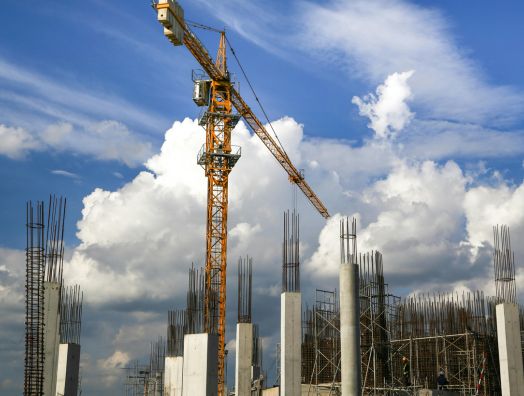
Our materials support a wide range of construction and infrastructure projects




Deformed steel rebar features surface ribs that create a stronger mechanical bond with concrete, making it the preferred reinforcement material for reinforced concrete structures. Plain round bar has a smooth surface and is generally used for light reinforcement, dowels, or general fabrication rather than primary structural reinforcement.
The ribs on deformed steel rebar increase the bond strength between the steel and surrounding concrete, helping transfer loads more effectively and reducing the risk of slippage under structural loading. This improves the overall stability and durability of reinforced concrete structures.
Rebar grades are selected according to the project's structural design, required yield strength, applicable construction standards, and local building codes. Choosing the correct grade helps ensure the reinforced concrete structure meets both safety and performance requirements.
It offers excellent resistance to seawater corrosion and maintains strength in humid and salt-rich conditions.
No. Strength is achieved through strain hardening rather than heat treatment.
Yes. It provides excellent weldability for structural fabrication.
Yes, it is commonly applied in tanks and pressure equipment.
Yes. It provides higher strength compared with most non-heat-treated aluminum alloys.
Yes. Thickness, width and temper can be adjusted based on project demand.
Get a fast, accurate quotation within 24 hours and secure reliable material supply for your next project.
Say something to start a live chat!