
...

Epoxy Coated Rebar

Epoxy Coated Rebar for Corrosion Protection and Infrastructure Applications

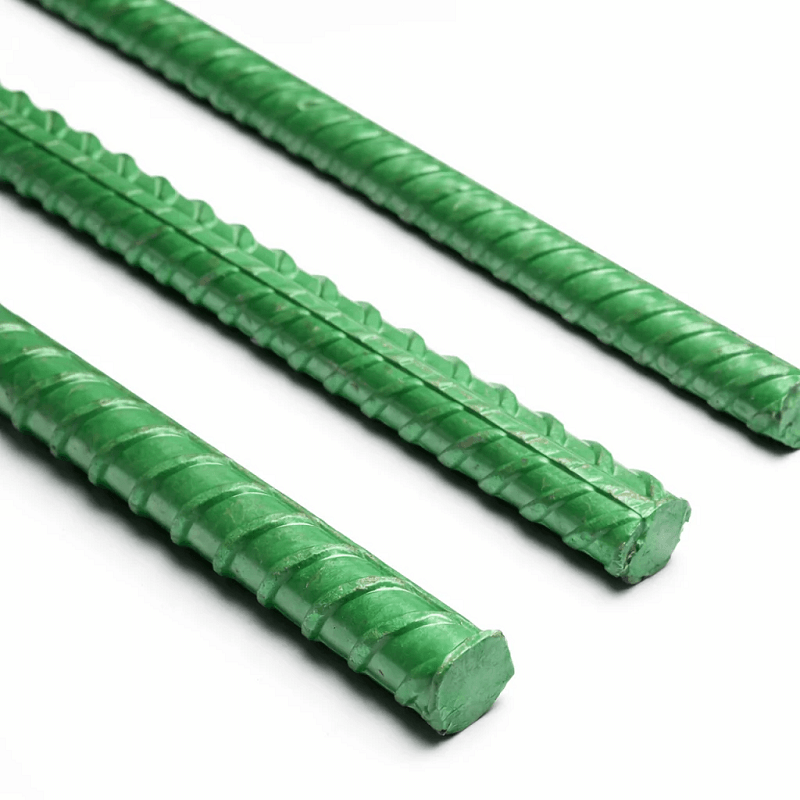
Epoxy Coated Rebar is manufactured by applying a durable epoxy coating to deformed steel reinforcement bars, providing outstanding corrosion resistance and extended service life in aggressive environments. It is designed for reinforced concrete structures exposed to moisture, chemicals, and chloride-rich conditions.

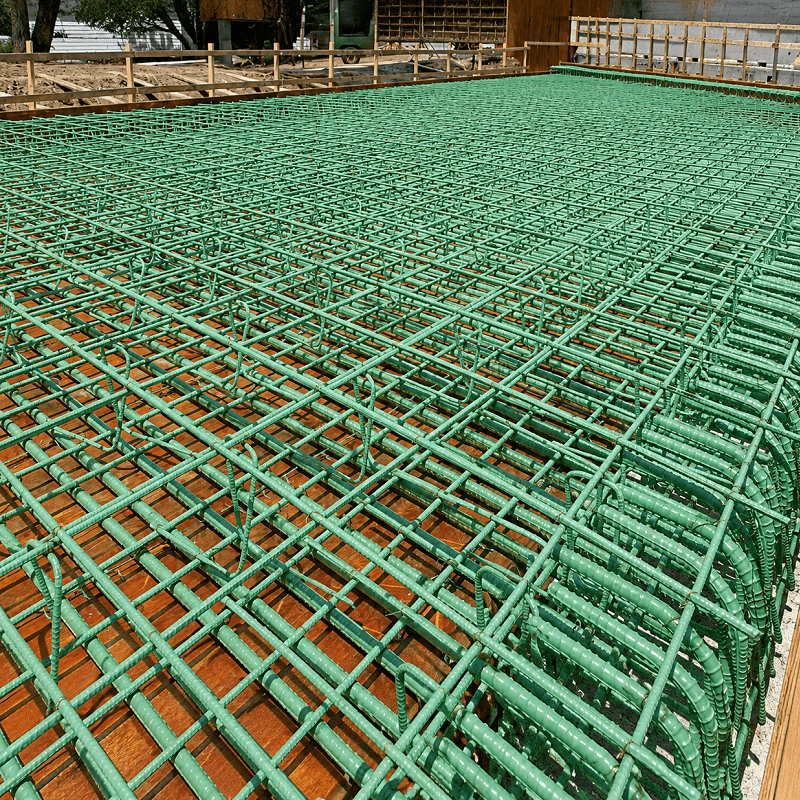
Widely used in bridges, marine structures, highways, parking facilities, and coastal construction projects requiring long-term corrosion protection and structural durability.

Product Features

Factory Direct Epoxy Coated Rebar Solutions for Marine Structures, Bridges & Coastal Infrastructure

Epoxy coated rebar (fusion-bonded epoxy coated steel reinforcing bar, FBE rebar, corrosion-resistant rebar, ASTM A775 steel rebar, and green coated rebar) serves as a vital structural reinforcement material across civil infrastructure, marine port construction, bridge deck overlays, and coastal concrete foundations. Manufactured by applying a protective thermosetting epoxy powder coating via electrostatic spray onto shot-blasted, pre-heated steel rebar, epoxy coated rebar provides an impermeable dielectric barrier that isolates steel from corrosive moisture, airborne chlorides, deicing salts, and harsh chemical environments.

At XQJ Metal, we manufacture and export premium-grade epoxy coated rebar strictly adhering to major international engineering standards, including ASTM A775 / A775M (standard specification for epoxy-coated steel reinforcing bars), ASTM A934 (pre-fabricated epoxy coating), ISO 14654, and BS 4449 specifications. Our state-of-the-art coating lines supply bar sizes from #3 to #11 (10mm to 40mm nominal diameter), steel yield grades including Grade 40, Grade 60 (420 MPa), and Grade 75 (520 MPa), standard stock lengths of 20ft, 40ft (6m, 12m), and custom cut-and-bend configurations.

Epoxy Coated Rebar Technical Specification & Engineering Matrix

Specification Parameter Standard Factory Specification (ASTM A775) Pre-fabricated Coating Grade (ASTM A934)
Standard Specifications ASTM A775 / A775M, ISO 14654, GB/T 20065 ASTM A934 / A934M, AASHTO M284
Imperial Rebar Sizes #3, #4, #5, #6, #7, #8, #9, #10, #11 #3 to #18 (#14 & #18 custom heavy sizes available)
Metric Rebar Sizes 10mm, 12mm, 16mm, 20mm, 25mm, 32mm, 40mm 10mm to 50mm heavy deformed bars
Epoxy Coating Thickness 175 to 300 µm (7 to 12 mils) nominal 200 to 350 µm (8 to 14 mils) heavy duty
Steel Yield Strength Grade Grade 40 (280 MPa), Grade 60 (420 MPa) Grade 60 (420 MPa), Grade 75 (520 MPa)
Coating Pinhole Testing 100% In-line Holiday Spark Test (<1 pinhole/m) 100% In-line Holiday Spark Test (Zero defects)

Epoxy Coated Rebar vs. Black Steel vs. Galvanized Rebar: Technical Comparison

Evaluating corrosion protection mechanisms helps infrastructure authorities and civil engineering consultants optimize structural longevity against lifetime maintenance costs:

  • Chloride Barrier Protection: Black uncoated rebar oxidizes rapidly when exposed to saltwater or deicing chemicals, leading to rust expansion and concrete spalling. Epoxy coated rebar creates a tough physical dielectric barrier, preventing chloride ions from contacting the steel substrate.
  • Cost Efficiency vs. Stainless Rebar: While stainless steel rebar offers high corrosion resistance, its material cost is significantly higher. Epoxy coated rebar delivers up to 50+ years of extended service life in marine environments at a fraction of the cost.
  • Concrete Bond Strength Performance: Modern deformed epoxy coated steel bars feature optimized rib geometries and controlled coating thicknesses (7–12 mils) that maintain high bond stress with concrete mixes without sacrificing slip resistance or structural shear capacity.

Core Engineering Advantages & Precision Fabrication Options

Bridge engineers, port contractors, and DOT procurement agencies specify our epoxy coated rebar for critical concrete structures due to several superior performance features:

  • Fusion-Bonded Polymer Adhesion: Shot-blasting cleans the steel substrate to Near-White Metal (SSPC-SP10 / Sa 2.5), ensuring superior physical adhesion and preventing under-film corrosion creep.
  • Flexibility & Bend Resistance: The cured epoxy coating retains flexible polymer chains, passing mandatory 180-degree mandrel bend tests without cracking, flaking, or micro-fracturing along the deformed ribs.
  • Chemical & Salt Spray Resistance: Outstanding resistance to deicing salts, calcium chloride, industrial acid rainwater, marine soil sulfates, and high-alkali concrete pore solutions.
  • Custom Cutting, Bending & Touch-up Kits: Factory pre-bent stirrups, hooks, continuous spirals, and specialized liquid epoxy touch-up repair compounds supplied for field cut ends and handling scratches.

Primary Civil Infrastructure & Construction Applications

Our heavy-duty epoxy coated rebar reinforces critical concrete infrastructure exposed to aggressive corrosive environments worldwide:

  • Marine Ports & Coastal Infrastructure: Seawalls, harbor piers, jetties, dock pilings, coastal retaining walls, and offshore wind turbine foundations.
  • Highway Bridges & Transportation Overpasses: Bridge deck slabs, highway barrier walls, abutments, piers, culverts, and parking structure decks exposed to winter road salts.
  • Water Treatment & Chemical Plants: Wastewater treatment tanks, desalination facilities, chemical storage pads, and industrial concrete floors.
  • Subway Systems & Underground Tunnels: Underground rail tunnel linings, station foundation mats, and utility conduit vaults.

Quality Control, Holiday Spark Testing & Export Handling

To guarantee complete corrosion protection and zero coating defects during ocean transit, XQJ Metal enforces strict Quality Assurance (QA) protocols on every epoxy coated rebar shipment:

  • In-Line Holiday & Thickness Testing: 100% continuous high-voltage spark testing (holiday detection) to verify zero pinholes or micro-voids, paired with magnetic thickness gauge audits across bar lengths.
  • Mechanical & Flexibility Audits: Tensile testing, yield strength verification, cold bend testing, and chemical composition analysis backed by official Mill Test Certificates (MTC EN 10204 3.1 / ASTM A775).
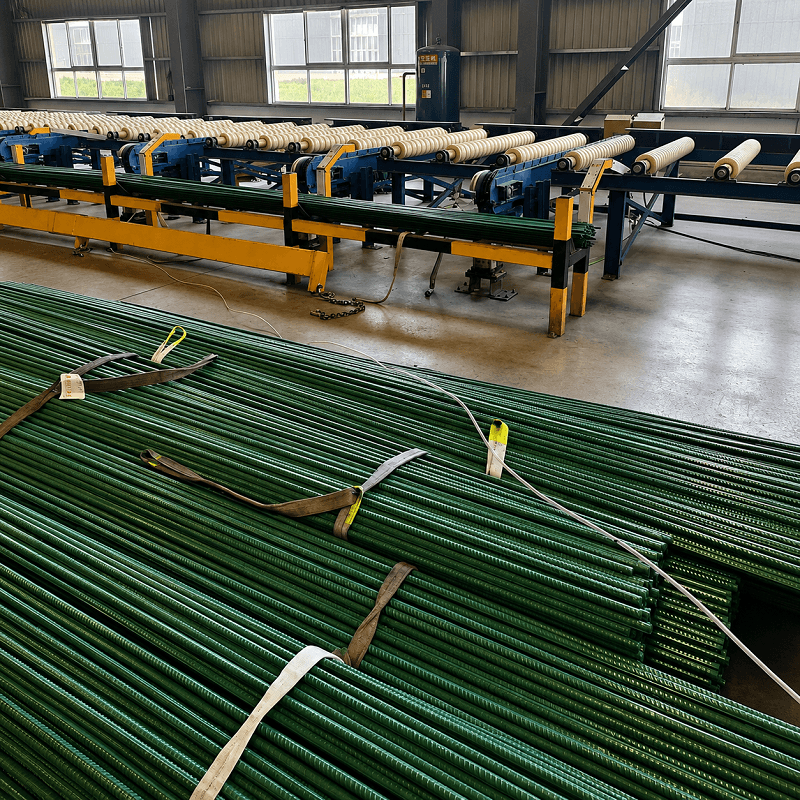
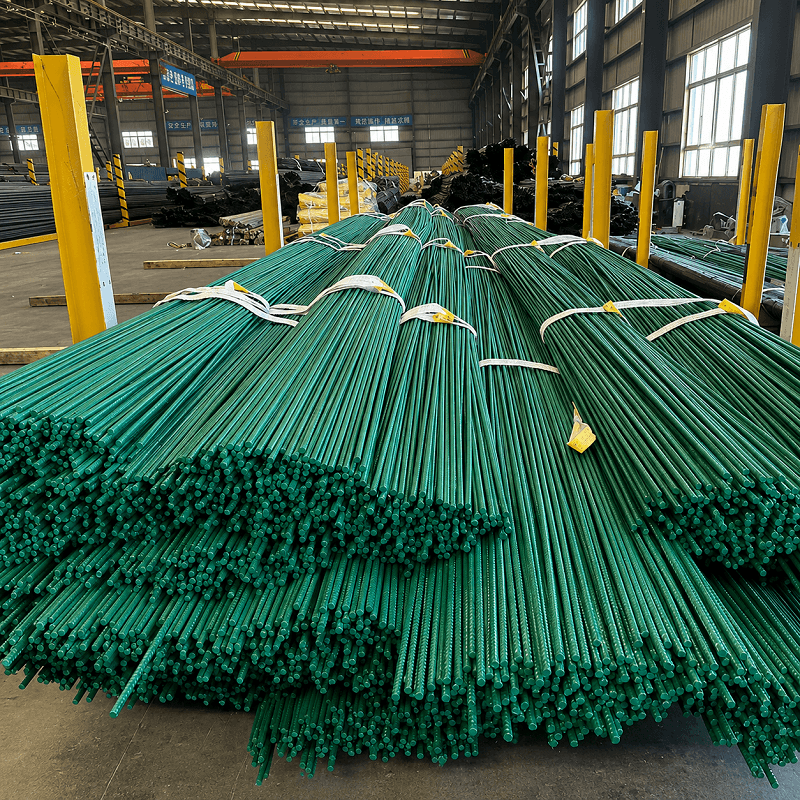
  • Padded Seaworthy Export Bundling: Rebar bundles are tied with nylon padded slings, plastic-coated wire ties, and wrapped in heavy moisture-proof woven sheeting with timber spacers to prevent coating abrasion during crane loading and vessel transit.

Frequently Asked Questions (FAQ)

Q1: What is the recommended epoxy coating thickness for ASTM A775 epoxy coated rebar?

A: According to ASTM A775 / A775M standards, the specified coating thickness after curing should be between 175 and 300 µm (7 to 12 mils) for at least 90% of all recorded measurement points on the rebar.

Q2: How should cut ends and damaged handling areas be treated on-site for epoxy coated rebar?

A: Any field-cut bar ends, sheared edges, or minor handling scratches must be thoroughly cleaned and coated with a compatible two-part liquid epoxy touch-up compound approved under ASTM A775 prior to concrete placement.

To receive current FOB/CIF price quotes, rebar bundle weight calculators, or Mill Test Certificates (MTC) for epoxy coated rebar orders, Contact Our Structural Steel Engineering Team today.

Specifications

Item

Specification

Alloy

5083

Temper

O / H111 / H112 / H32

Thickness

0.5 – 6.0 mm

Width

20 – 2600 mm

Surface Finish

Mill Finish

Standard

ASTM B209 / EN 573 / GB/T 3880

Specifications

Item

Specification

Material Grade

HRB400 / HRB500 / ASTM A615 Gr.40 / Gr.60 / BS 4449 B500B / B500C

Diameter

6–50 mm

Length

6–12 m / Custom

Coating

Fusion Bonded Epoxy (FBE)

Processing Service

Cutting / Bending / Bundling

Standard

ASTM A775 / ASTM A934 / BS / ISO / GB

Application Areas

Our materials support a wide range of construction and infrastructure projects

Frequently Asked Questions

Any Question?

You can ask anything you want to know Feedback

Epoxy coated rebar is protected by a bonded epoxy coating that helps isolate the steel from moisture, chlorides, and other corrosive substances, while black steel rebar has no protective coating. Epoxy coated rebar is commonly specified for structures exposed to aggressive environments where enhanced corrosion protection is required.

The epoxy coating acts as a protective barrier that helps reduce corrosion caused by moisture and chloride penetration. By protecting the reinforcing steel, it contributes to improved durability and reduced maintenance requirements over the service life of the structure.

Epoxy coated rebar is commonly specified for bridges, marine structures, parking garages, coastal infrastructure, wastewater facilities, and other reinforced concrete projects exposed to corrosive environments where long-term durability is a primary design consideration.

1 Why is 5083 aluminum coil used in marine environments?

It offers excellent resistance to seawater corrosion and maintains strength in humid and salt-rich conditions.

Epoxy Coated Rebar

No. Strength is achieved through strain hardening rather than heat treatment.

Yes. It provides excellent weldability for structural fabrication.

Yes, it is commonly applied in tanks and pressure equipment.

Yes. It provides higher strength compared with most non-heat-treated aluminum alloys.

Yes. Thickness, width and temper can be adjusted based on project demand.

Keep Your Project On Track — On Time and Within Budget

Get a fast, accurate quotation within 24 hours and secure reliable material supply for your next project.

Speak with a Project Specialist

Contact Information

Say something to start a live chat!

Related products:

6061 Aluminum Round Bar

High-Strength Aluminum Bars for Machining and Structural Applications

7075 Aluminum Round Bar

Aircraft-Grade Aluminum Bars for High-Strength Engineering Applications

2024 Aluminum Round Bar

High-Strength Aluminum Bars for Aerospace and Precision Engineering

6082 Aluminum Round Bar

High-Strength Aluminum Bars for Structural and Engineering Applications

6063 Aluminum Round Bar

Premium Aluminum Bars for Architectural and Decorative Applications

304 Stainless Steel Round Bar

Versatile 304 austenitic stainless steel round bar offering excellent corrosion resistance, high mechanical strength, good machinability, and superior weldability. Ideal for pump shafts, valves, machinery components, marine hardware, and structural fasteners.

304L Stainless Steel Round Bar

Low-Carbon Stainless Steel Round Bar for Welded and Corrosion-Resistant Applications

316 Stainless Steel Round Bar

Corrosion-Resistant Stainless Steel Round Bar for Marine and Chemical Applications

316L Stainless Steel Round Bar

Low-Carbon Stainless Steel Round Bar for Marine and Chemical Applications

420 Stainless Steel Round Bar

High-Hardness Stainless Steel Round Bar for Wear-Resistant Applications

2205 Duplex Stainless Steel Round Bar

High-Strength Duplex Stainless Steel Round Bar for Offshore and Chemical Applications

C10200 Copper Bar

Oxygen-Free Copper Bar for High-Conductivity Electrical Applications

C11000 Copper Bar

Electrolytic Tough Pitch Copper Bar for Industrial and Electrical Applications

C12000 Copper Bar

Phosphorus-Deoxidized Copper Bar for Fabrication and Heat Transfer Applications

C12200 Copper Bar

Deoxidized Copper Bar for Piping and Industrial Applications

Copper Alloy Bar

High-Strength Copper Alloy Bar for Industrial and Mechanical Applications

Carbon Steel Flat Bar

Carbon Steel Flat Bar for Structural and Industrial Applications

Carbon Steel Hex Bar

Carbon Steel Hex Bar for Precision Machining and Industrial Manufacturing

Carbon Steel Round Bar

Carbon Steel Round Bar for Engineering and Industrial Applications

Carbon Steel Square Bar

Carbon Steel Square Bar for Structural Fabrication and Engineering Applications

Deformed Steel Rebar

Deformed Steel Rebar for Reinforced Concrete and Construction Applications