


Stainless Steel Angle Bar is an L-shaped structural profile designed for construction, fabrication, and engineering applications. It provides excellent mechanical strength, corrosion resistance, and long-term durability, making it suitable for both indoor and outdoor environments.
Widely used in structural frameworks, equipment supports, machinery fabrication, marine projects, and industrial installations requiring reliable structural performance and corrosion protection.
Stainless steel angle bar (including structural equal angle, unequal angle, and cold-drawn L-shaped profiles) is a crucial structural material widely engineered for industrial fabrication, building construction, equipment framing, and corrosive offshore environments. Designed with a 90-degree L-shaped cross-section, these metal angles provide high structural rigidity, excellent strength-to-weight ratios, and reliable long-term atmospheric corrosion resistance.
At XQJ Metal, we manufacture and supply prime-quality stainless steel angle bar products strictly adhering to international standards, including ASTM A276, ASTM A484, JIS G4303, and EN 10088. Our comprehensive inventory covers popular material grades such as AISI 304, 304L, 316, 316L, 321, 310S, and Duplex 2205, available in hot-rolled annealed & pickled (HRAP), cold-drawn, and surface-polished finishes.
| Angle Profile Category | Standard Material Alloys | Dimensional Capabilities (Leg Length x Thickness) | Surface Processing Options |
| Equal Angle Bar (L-Profile) | AISI 304 / 304L, 316 / 316L | 20mm x 20mm to 200mm x 200mm (Thickness: 3mm – 20mm) | Hot Rolled Annealed & Pickled (HRAP), Sandblasted, 180 Grit Polish |
| Unequal Angle Bar | AISI 304, 316L, 201 | 25mm x 16mm to 200mm x 125mm (Custom leg dimensions) | Cold Drawn, Hairline Finish, No.4 Satin, Protective PVC Film |
| Heavy Structural Angles | 310S, 321, Duplex 2205 | Custom heavy structural sections up to 25mm wall thickness | Hot Rolled, Annealed, Laser Welded Heavy Structural Angles |
Selecting the appropriate alloy grade for your stainless steel angle bar application depends directly on operational environment, mechanical load expectations, and corrosive exposure:
Our heavy-duty stainless steel angle bar products are specified across diverse global industries:
To ensure every order of stainless steel angle bar products meets strict engineering contracts, XQJ Metal conducts thorough factory quality checks prior to shipping:
Q1: What is the main difference between hot-rolled and cold-drawn stainless steel angles?
A: Hot-rolled HRAP angles feature slightly rounded inner/outer corners and a pickled matte finish, ideal for heavy load-bearing structural frameworks. Cold-drawn angles offer crisp 90-degree outer corners, tighter dimensional tolerances, and a smoother surface finish for precision machine fabrication.
Q2: Can XQJ Metal cut structural angle bars to project-specific lengths?
A: Yes, we provide precision CNC cutting services to supply custom cut-to-length stainless steel angle bar orders from 0.5m to 12.0m, minimizing job-site waste.
To request technical CAD drawings, weight charts, or factory-direct wholesale pricing for stainless steel angle bar supplies, Contact Our Sales Engineering Team today.
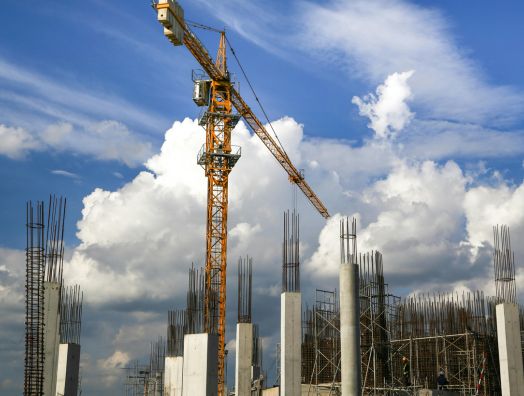
Our materials support a wide range of construction and infrastructure projects

Stainless steel angle bar provides excellent corrosion resistance and requires little maintenance, making it suitable for humid, chemical, marine, and outdoor environments. Carbon steel angle bar generally offers lower material cost but often requires protective coatings to prevent corrosion.
The L-shaped profile provides reliable structural support while allowing straightforward cutting, welding, drilling, and bolted assembly. Combined with the corrosion resistance of stainless steel, it is well suited for both industrial structures and architectural applications.
The appropriate grade depends on the service environment, corrosion exposure, fabrication requirements, and mechanical performance needed. Grades such as 304 are commonly selected for general applications, while 316 is preferred for marine, chemical, and other highly corrosive environments.
It offers excellent resistance to seawater corrosion and maintains strength in humid and salt-rich conditions.
No. Strength is achieved through strain hardening rather than heat treatment.
Yes. It provides excellent weldability for structural fabrication.
Yes, it is commonly applied in tanks and pressure equipment.
Yes. It provides higher strength compared with most non-heat-treated aluminum alloys.
Yes. Thickness, width and temper can be adjusted based on project demand.
Get a fast, accurate quotation within 24 hours and secure reliable material supply for your next project.
Say something to start a live chat!