

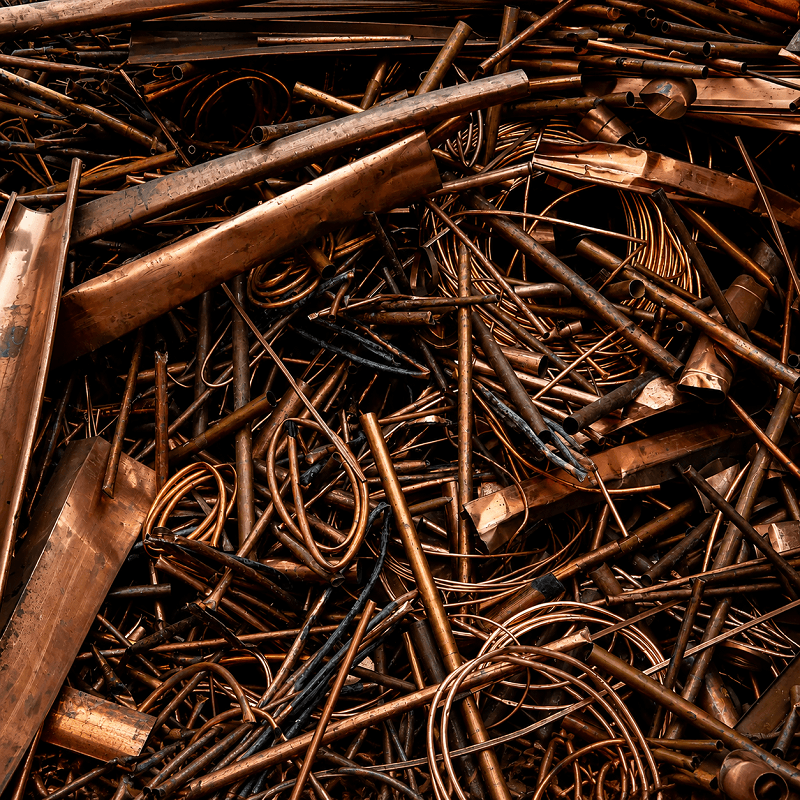
Mixed Copper Scrap consists of recyclable copper materials collected from industrial production, construction projects, electrical equipment, and manufacturing processes. It provides valuable copper recovery potential and serves as an important raw material for recycling and secondary metal production.
Widely used by metal recyclers, smelters, foundries, and industrial processing facilities requiring cost-effective copper recovery and sustainable material sourcing.
Mixed copper scrap (including clean copper solids, unalloyed copper tubing, Birch/Cliff grade copper scrap, copper wire ends, and mixed heavy copper solids) is a critical secondary metal raw material widely utilized in copper smelting, foundry casting, and industrial alloy production. As global demand for sustainable copper recovery increases, high-purity recycled copper scrap provides an economical and eco-friendly alternative to primary copper cathode refined from raw copper ore.
At XQJ Metal, we supply and export high-grade mixed copper scrap conforming to international scrap recycling specifications established by the Institute of Scrap Recycling Industries (ISRI). Our recycled copper materials feature high average metallic copper purity ranging from 90% to 95%+ Cu, minimal non-metallic attachments, low moisture content, and negligible oil or lacquer residue.
| Specification Parameter | Standard Commercial Scrap Grade | Customized Batch Options |
| ISRI Scrap Classification | Birch / Cliff (Mixed Heavy Copper Solids & Tubing) | Custom Sorted Heavy & Light Copper Solids |
| Copper Purity Level (Cu) | 90% to 95% Minimum Copper Content | Up to 98% Cu for Selected Clean Tubing Lots |
| Impurity Thresholds | Pb ≤ 0.3%, Zn ≤ 0.5%, Fe ≤ 0.3%, Sn ≤ 0.2% | Free from radioactive materials & excess iron attachments |
| Material Forms & Shapes | Mixed copper pipes, wire segments, sheets, punchings | Hydraulically compressed bales or loose bulk crates |
| Moisture & Oil Content | Less than 0.5% surface moisture/grease | Cleaned and mechanically degreased processing available |
Industrial foundries, copper refineries, and brass mills rely heavily on premium mixed copper scrap feeds due to numerous processing and economic benefits:
Understanding the exact scrap grading system helps metallurgical buyers select the appropriate grade for their specific furnace technology:
Our global inventory of high-purity mixed copper scrap powers essential metallurgical manufacturing sectors worldwide:
To ensure smooth customs clearance and furnace safety, XQJ Metal maintains strict quality inspection protocols across every consignment of mixed copper scrap:
Q1: What is the typical copper recovery rate when melting Birch/Cliff grade mixed copper scrap?
A: Our clean mixed copper scrap delivers a high metallic yield between 90% and 94%, depending on furnace type, flux chemistry, and slag skimming practices.
Q2: Do you provide official pre-shipment inspection certificates (CCIC / SGS)?
A: Yes, we provide full SGS, CCIC, or equivalent third-party pre-shipment inspection certificates covering weight, radiation clearance, and metallic purity upon request.
To receive live FOB/CIF pricing quotes, metallurgical analysis reports, or container availability for mixed copper scrap, Contact Our Metal Recycling Sales Team today.
Our materials support a wide range of construction and infrastructure projects





Mixed copper scrap consists of various copper grades and forms that may include different alloys, coatings, or attached materials, while bare bright copper scrap is clean, uncoated, unalloyed copper with a consistently high copper content. The appropriate scrap grade depends on the recycling process and material recovery requirements.
Proper sorting helps separate different copper grades and remove unwanted materials before processing. Better classification improves recovery efficiency, reduces refining costs, and increases the overall value of recycled copper.
Mixed copper scrap provides a practical and cost-effective source of recyclable copper for smelters and secondary metal processors. With appropriate sorting and refining, it can be efficiently recovered and reused in the production of new copper products.
It offers excellent resistance to seawater corrosion and maintains strength in humid and salt-rich conditions.
No. Strength is achieved through strain hardening rather than heat treatment.
Yes. It provides excellent weldability for structural fabrication.
Yes, it is commonly applied in tanks and pressure equipment.
Yes. It provides higher strength compared with most non-heat-treated aluminum alloys.
Yes. Thickness, width and temper can be adjusted based on project demand.
Get a fast, accurate quotation within 24 hours and secure reliable material supply for your next project.
Say something to start a live chat!