

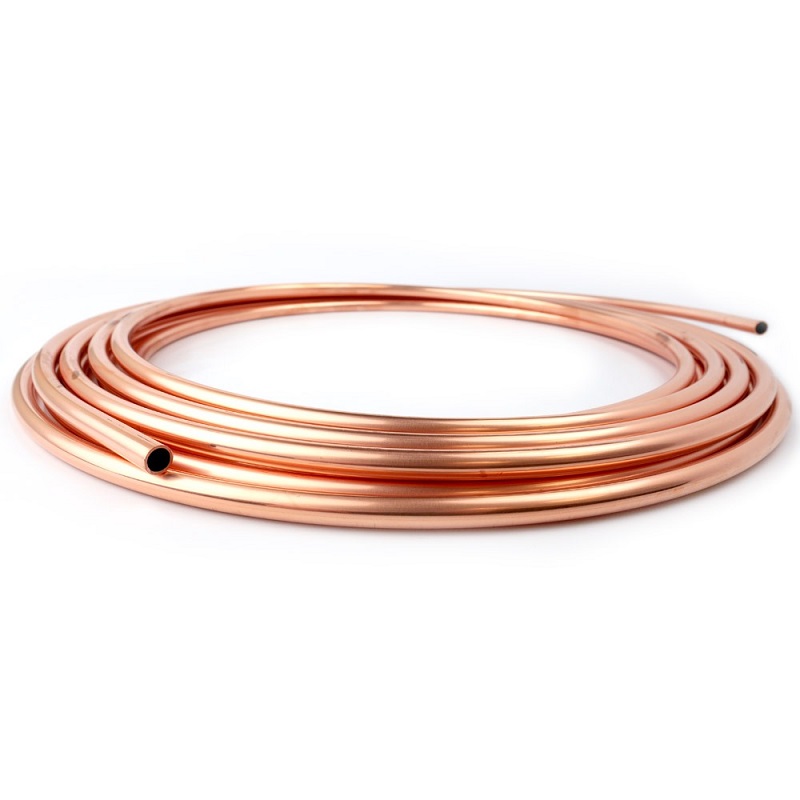
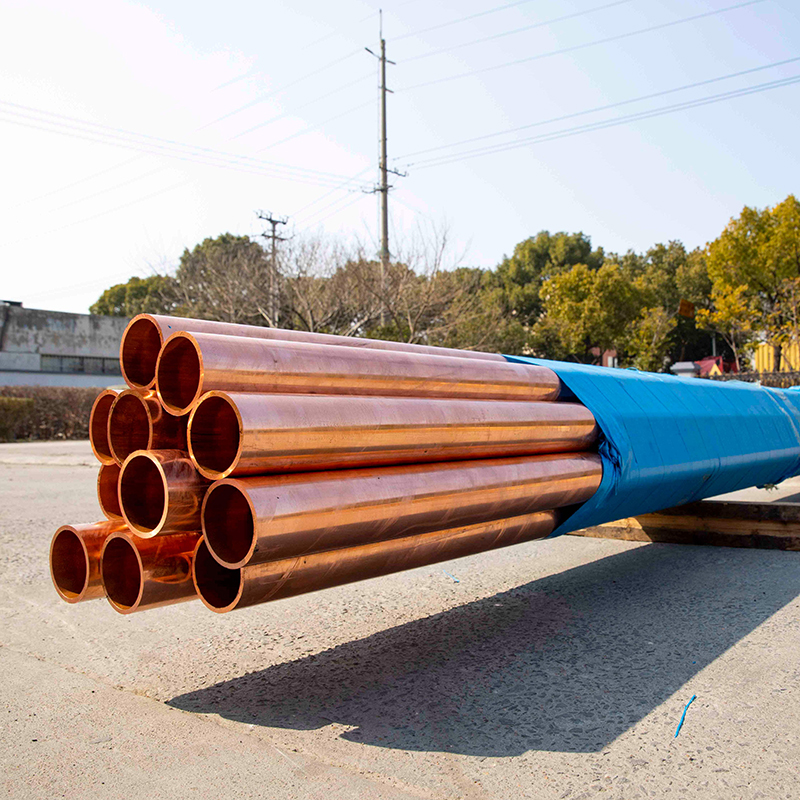
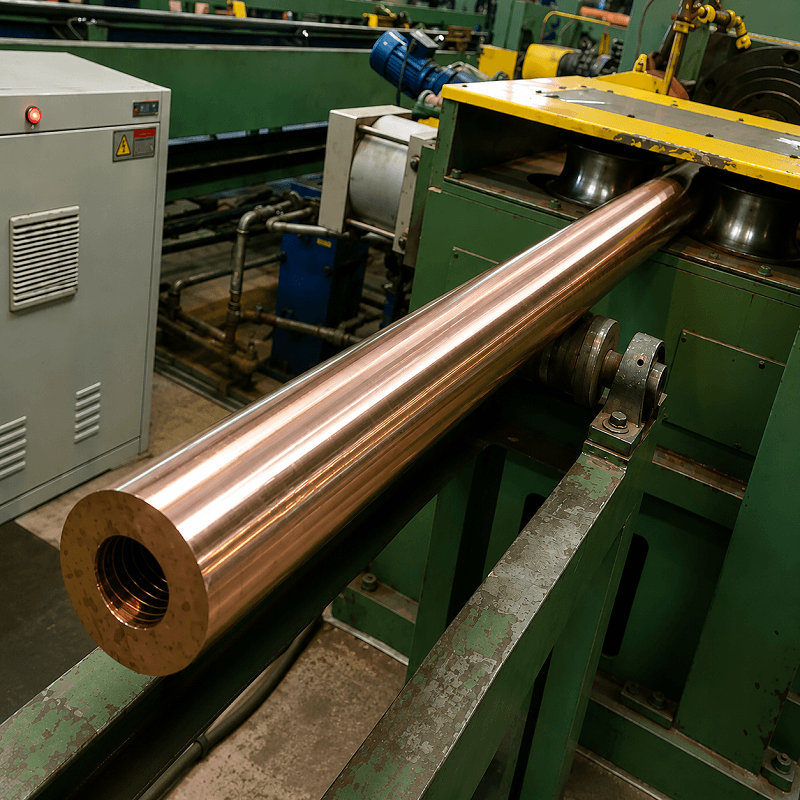
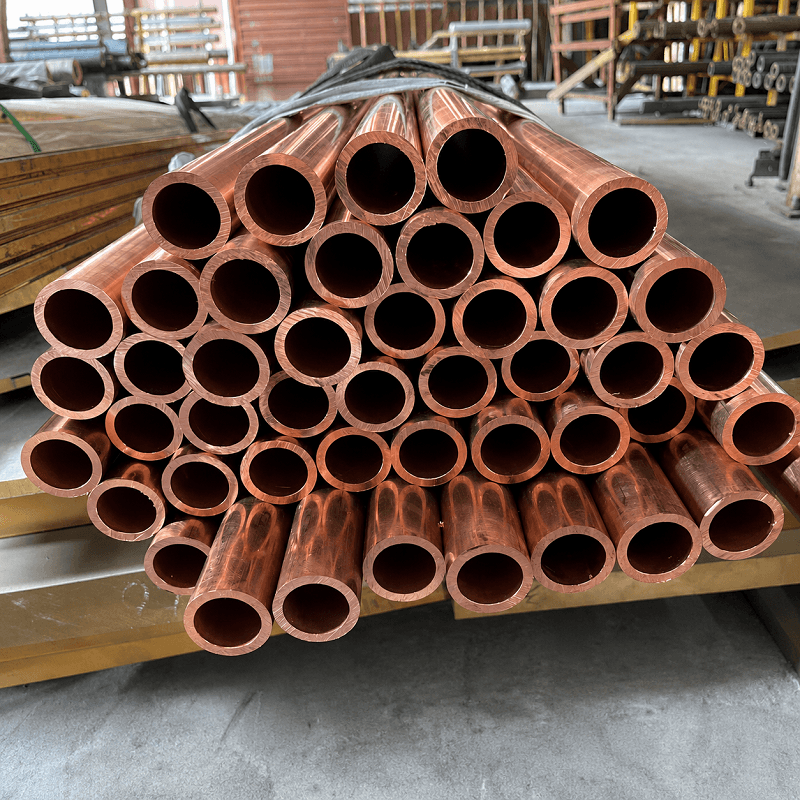
Copper Alloy Pipe is engineered to provide enhanced mechanical strength, corrosion resistance, and durability compared with pure copper materials. It is particularly suitable for demanding service environments where long-term reliability and resistance to aggressive media are required.
Widely used in marine engineering, seawater systems, heat exchangers, condensers, and industrial applications requiring superior corrosion resistance and mechanical performance.
Copper alloy pipe (high-corrosion cupronickel pipe C70600/C71500, brass tube C26000/C27000, aluminum brass pipe C68700, Admiralty brass pipe C44300, and bronze seamless pipe) is cold-drawn and continuous-annealed to deliver superior seawater corrosion resistance, anti-biofouling performance, high thermal transfer efficiency, and elevated bursting pressure capacity. Engineered specifically for harsh marine environments, power plant condensers, oil & gas offshore platforms, and chemical fluid transport, copper alloy pipe resists erosion-corrosion and stress corrosion cracking under aggressive fluid velocities.
At XQJ Metal, we utilize advanced continuous casting, hydraulic extrusion, multi-pass cold drawing, and bright annealing production lines to manufacture world-class copper alloy pipe conforming strictly to global engineering standards, including ASTM B111 (copper alloy condenser tubes), ASTM B466 (seamless copper-nickel pipe), ASTM B135 (seamless brass tube), EN 12451, and JIS H3300 specifications. We supply outer diameters (OD) ranging from 3mm to 300mm, wall thicknesses from 0.5mm to 20mm, and cut-to-length options up to 12 meters in soft annealed (O60), light drawn (H55), and hard drawn (H80) tempers.
| Copper Alloy Family | Standard Grade & UNS Code | Tensile Strength (MPa) | Yield Strength (MPa) | Primary Engineering Attributes |
| Cupronickel Pipe (90/10) | C70600 (CuNi10Fe1Mn) | 300 to 450 MPa | 100 to 220 MPa | Exceptional biofouling resistance, outstanding marine seawater corrosion immunity, high weldability |
| Cupronickel Pipe (70/30) | C71500 (CuNi30Fe1Mn) | 400 to 580 MPa | 150 to 300 MPa | Higher erosion velocity limit (up to 4.5 m/s), high pressure capacity for naval & submarine piping systems |
| Aluminum Brass Tube | C68700 (CuZn20Al2As) | 380 to 520 MPa | 140 to 250 MPa | Arsenic-inhibited against dezincification, forms protective alumina film for high-velocity condenser tubes |
| Admiralty Brass Tube | C44300 (CuZn28Sn1As) | 340 to 480 MPa | 120 to 220 MPa | Excellent heat conductivity, resistant to brackish water corrosion in thermal power station heat exchangers |
Selecting between pure copper pipe (C12200 TP2) and specialized copper alloy pipe depends on fluid chemistry, flow velocity, and mechanical stress levels:
Shipbuilders, power plant operators, and offshore engineers choose our copper alloy pipe products for stringent engineering compliance:
Our corrosion-resistant copper alloy pipe tubing is widely installed across heavy engineering and marine transport sectors:
To ensure total reliability in subsea and power grid applications, XQJ Metal enforces rigorous Quality Assurance (QA) protocols on every copper alloy pipe shipment:
Q1: What is the main difference between C70600 (90/10) and C71500 (70/30) Cupronickel Copper Alloy Pipe?
A: C70600 (90/10) offers optimal cost-efficiency and excellent marine biofouling resistance for general seawater cooling systems, while C71500 (70/30) contains higher nickel content, providing superior strength and resistance to higher seawater flow velocities (up to 4.5 m/s) in critical naval applications.
Q2: Can XQJ Metal supply copper alloy pipe in custom lengths with cut-to-spec heat exchanger tube bundles?
A: Yes, we supply seamless and welded copper alloy pipes in straight lengths up to 12 meters or custom U-bend tube shapes tailored specifically for shell-and-tube heat exchanger configurations.
To request current FOB/CIF spot price quotes, alloy tube datasheets, or sample pipe lengths for copper alloy pipe, Contact Our Marine Engineering Team today.
Our materials support a wide range of construction and infrastructure projects





The appropriate copper alloy pipe depends on factors such as corrosion resistance, pressure requirements, thermal conductivity, fluid compatibility, and the operating environment. Selecting the correct alloy helps ensure long-term reliability and system performance.
Key considerations include corrosion resistance, heat transfer efficiency, pressure capability, fabrication method, and the type of fluid or gas being conveyed. These factors help determine the most suitable copper alloy for the intended service conditions.
Copper alloy pipes are widely used in HVAC systems, heat exchangers, refrigeration equipment, marine engineering, process piping, plumbing, and industrial fluid handling systems where dependable corrosion resistance and thermal performance are required.
It offers excellent resistance to seawater corrosion and maintains strength in humid and salt-rich conditions.
No. Strength is achieved through strain hardening rather than heat treatment.
Yes. It provides excellent weldability for structural fabrication.
Yes, it is commonly applied in tanks and pressure equipment.
Yes. It provides higher strength compared with most non-heat-treated aluminum alloys.
Yes. Thickness, width and temper can be adjusted based on project demand.
Get a fast, accurate quotation within 24 hours and secure reliable material supply for your next project.
Say something to start a live chat!